Hytale Update 3 finally brings animal taming to survival, and yes: it’s as game-changing as you hoped. Beyond the cute factor, this system makes your base feel alive, boosts your farming loop, and turns “random wildlife” into reliable resources.
Whether you play solo or on a server with friends, taming livestock is a real progression shortcut. In this 2026 guide, you’ll learn how taming works, which food each animal wants, how to secure your pens, and which animals to prioritize first.
Tame an animal in Hytale Update 3
To tame an animal, walk up to it and interact while holding the correct food in your hand. If the animal accepts the item, it becomes tamed and will behave differently around you, especially when you get close.
After taming, you can feed it occasionally to keep it happy and to heal it. When things are going well, you’ll see hearts above its head, which is basically Hytale’s way of saying “you’re doing great.”
📝 Note: A tamed animal can still wander off. If you want it to stay near your base, build a proper pen.
Food list for each animal
If you offer the wrong food, the animal will hint at what it wants. Still, knowing the list beforehand is the difference between a smooth expedition and going home empty-handed.
Here are the taming foods for each animal in Hytale Update 3. Keep a few of these in your inventory when you explore, and you’ll always be ready to recruit new livestock.
Bison: cauliflower
Warthog: onion
Boar: pumpkin
Rabbit: carrot
Camel: tomato
Chicken: corn
Cow: lettuce
Goat: apple
Horse: carrot
Turkey: corn
Skrill: chili pepper
Ram: apple
Mouflon: apple
Mosshorn: potato
💡 Tip: Dedicate one hotbar row to taming foods when you go exploring.
Why taming animals is worth it
A tamed animal won’t run away anymore when you approach, unless it’s injured. That alone makes farms easier to manage, pens less chaotic, and your base a lot more “home” and less “wildlife documentary.”
But the real value is what each species brings to your progression loop, from passive resources to mounts and faster farming.
Passive resources
Cows can be milked regularly for milk, useful for cooking
Sheep can be sheared for wool, essential for textile crafting
Chickens lay eggs, and a chicken coop (craftable at Farmer’s Workbench level 3) enables automatic storage
All animals also produce droppings passively, which you can convert into fertilizer bags to speed up crop growth.
Mounts
The horse is the classic mount: fast and available early in Emerald Grove
The camel is found in the Howling Sands (Zone 2), perfect for desert travel
The ram is rideable too: slower, but way more intimidating in a fight
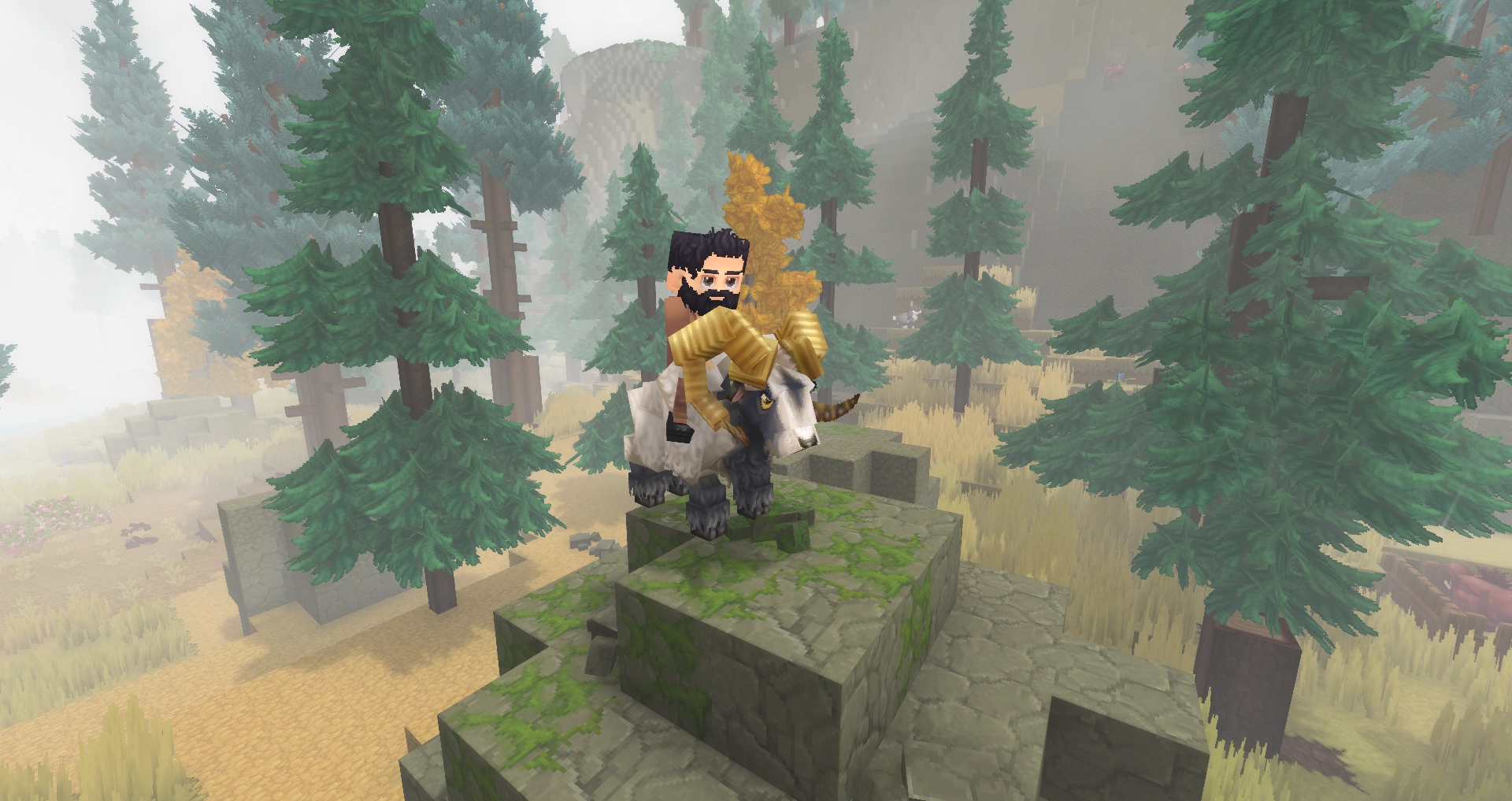
A horse is fine… but it’s also kind of mainstream. A ram with those angry eyes? That’s how you make enemies reconsider their life choices.
Progression chain
More livestock means more fertilizer, which means faster farming, which means more life essences. And life essences are needed for many advanced crafts and for trading with merchants, so taming isn’t just “cute,” it’s a serious progression accelerator.
Keep your animals safe with a proper pen
A poorly built pen is basically a “free escape room” for your herd. If you want your animals to survive (and stay where you put them), stick to these simple building rules.
Build at least 2 blocks high to prevent animals from jumping out
Use solid blocks for the floor and add light to reduce hostile spawns inside
Add an airlock entrance with two doors to stop animals slipping out
Separate species to make resource collection and management easier
Plan enough space, around 5x5 blocks per species for a small group
⚠️ Warning: Without a pen, animals can wander off, get injured, or be attacked. Then it’s “hunting,” but in the worst way.
Food bag: the tool that changes everything
The food bag is crafted at the Farmer’s Workbench starting at level 1. If you don’t have the workbench yet, you can craft it with 6 logs and 3 stones.
Food bag recipe
10 wheat
5 vegetables (any: carrot, tomato, onion...)
5 fruits (any: apple, pumpkin...)
10 life essences
How to use it
Held in hand: nearby animals are attracted to you, ideal for guiding a herd home
Placed on the ground: animals gather around it, perfect for keeping them centered in a pen
⚠️ Warning: The food bag attracts animals but does not tame them. You still need the correct species-specific food to tame.
Fertilizer and life essences: the real value
Livestock isn’t only about convenience or vibes. Animals produce droppings passively, and you can turn them into fertilizer bags to speed up plant growth.
Once your agriculture ramps up, your production of life essences rises naturally. Since life essences are required for many crafts and are useful for trading, a stable farm becomes one of the cleanest ways to scale your progression.
Best animals to tame first
Not all animals are equal early on. If you’re starting out and your resources are tight, this priority list gives you the best “value per carrot” in 2026.
Tier S — Tame these first
Horse (carrot): your core mount for faster exploration, easy to find in Emerald Grove
Cow (lettuce): milk plus droppings for fertilizer, the backbone of farming progress
Chicken (corn): steady eggs, even better with a chicken coop, cheap and efficient
Tier A — Get them ASAP
Sheep (apple): wool is key for textile crafting, shear regularly
Camel (tomato): Zone 2 mount, almost mandatory for Howling Sands exploration
Tier B — Comfort and collection
Bison (cauliflower): big fertilizer potential thanks to its size
Ram (apple): rideable and fun, but slower than the horse
Mosshorn (potato): useful to diversify your farm
Tier C — For completionists
Warthog, boar, rabbit, turkey, goat, skrill: tameable, but no major unique resource yet
💡 Tip: Start with a horse + 2–3 chickens + 1 cow. You get mobility, eggs, and the fertilizer → farming → life essences loop.
Go further (and current limits)
In 2026, Hytale is still ramping up, and some systems are incomplete. For example, you still can’t breed animals, and babies don’t grow up, which limits long-term “infinite farm” setups.
To expand your herd, you’ll need to explore and bring back new animals. If you want to bypass these limits, mods like HyTames can help, but updates may break compatibility and force you to remove the mod.
🚨 Important: Before adding any mod, test it on a copy of your server. A Hytale update can break mods overnight if they aren’t maintained.
Questions fréquentes
How do you know an animal is tamed?
After you interact with the correct food, the animal stops fleeing when you approach. If you feed it afterward, hearts may appear above its head, which indicates it’s happy and being cared for.
Do tamed animals stay in one place?
No. They can still move around and wander away. If you want them near your base, build a secure pen and protect it from predators.
Can you breed animals in 2026?
Not yet, based on the current state of the game. To grow your herd, you must capture new animals in the wild, or use a mod if you accept potential compatibility risks.
Conclusion
Taming animals in Hytale Update 3 is simple, but insanely rewarding: passive resources, mounts, faster farming, and a base that actually feels alive. With the right food and a solid pen, one good expedition can turn into a productive farm setup.
Want to build your own Hytale server to play with friends? Start strong with a free 12-hour trial (no credit card), then explore all game options on our hosting page.

 22 February 2026
  Enjoy 10% off your first month of server with MineStrator using the code ACTU10!